AMD Radeon Pro W7900D: The New Standard for Professional Graphics & AI Acceleration
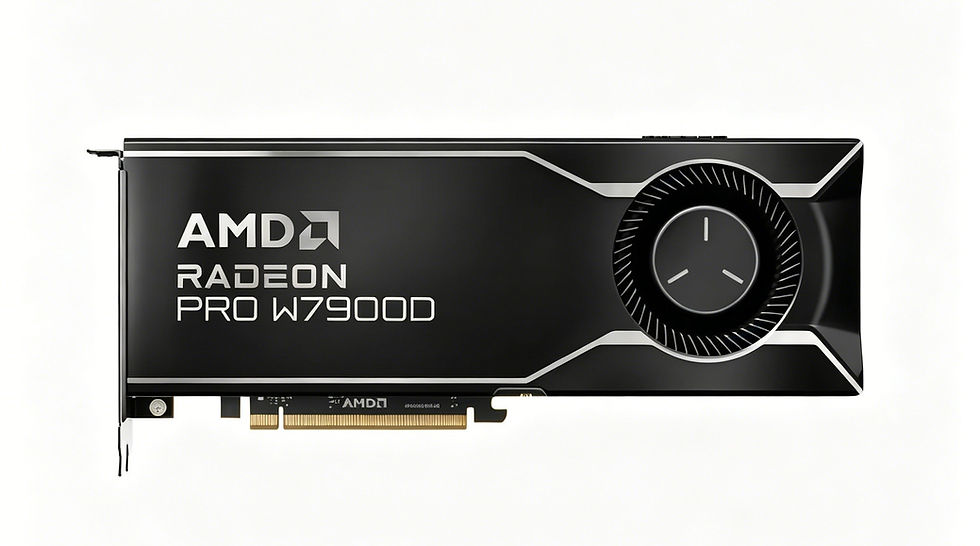
The AMD Radeon Pro W7900D represents a pivotal advancement in workstation-class computing, designed to address the evolving demands of modern professional workflows. Built on AMD’s cutting-edge RDNA 3 architecture, this graphics card delivers exceptional performance, expansive memory capacity, and enterprise-grade reliability—making it a versatile solution for content creation, engineering design, and AI workloads.
Core Specifications: Built for Professional Performance
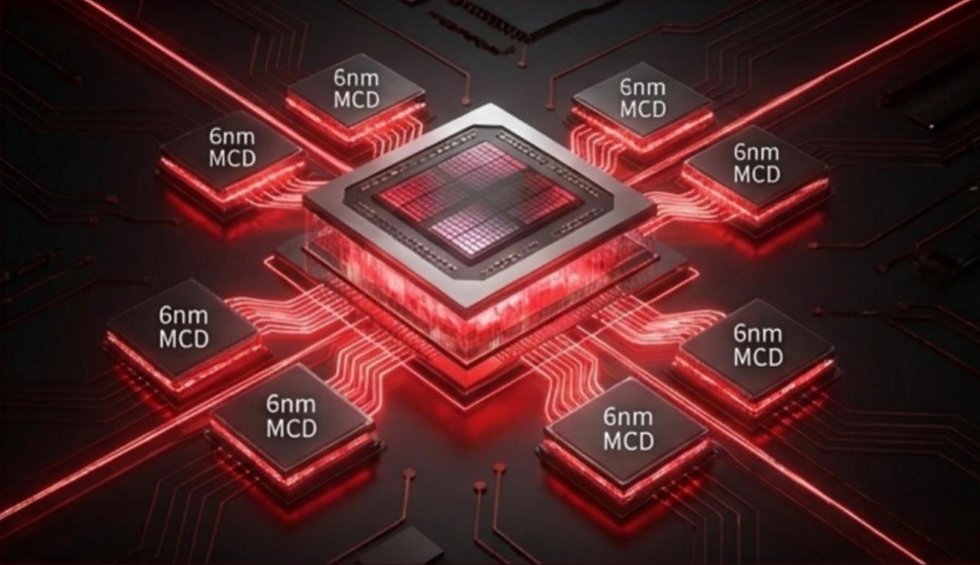
At the heart of the W7900D lies AMD’s advanced RDNA 3 architecture, featuring a 5nm Graphics Compute Die (GCD) paired with 6nm Memory Cache Dies (MCDs). This chiplet design balances raw performance with power efficiency, resulting in a card that excels in both single-precision compute and memory-intensive tasks.
Feature Specification
Architecture AMD RDNA 3 (Chiplet Design)
Compute Units 96 (6144 Stream Processors)
AI Accelerators 192 dedicated AI engines
Ray Accelerators 96 hardware ray tracing units
Memory 48GB GDDR6 with ECC support
Memory Bandwidth 864 GB/s
Form Factor Dual-slot, full-height, PCIe 4.0 x16
TDP 295W typical
Display Connectivity Multi-display support (DisplayPort 2.1)
The inclusion of 48GB ECC GDDR6 memory is a defining feature of the W7900D. Unlike consumer GPUs that cap out at 24GB non-ECC memory, this workstation card provides double the capacity with error-correcting code (ECC) support, preventing silent data corruption and ensuring stability during long-running simulations, renders, and AI training tasks.
Key Capabilities: Where Performance Meets Reliability
1. AI Acceleration for Modern Workloads
With 192 dedicated AI accelerators, the W7900D delivers exceptional performance for both training and inference tasks. It supports key frameworks like PyTorch, TensorFlow, and Hugging Face, making it ideal for:
Generative AI: Running large language models (LLMs) and diffusion models locally or in small clusters.
Computer Vision: Processing high-resolution images and video for analysis and classification.
Multimodal Workflows: Combining text, image, and video data for AI-driven creative projects.
The card’s memory capacity allows it to handle larger models without offloading to system RAM, significantly reducing latency and improving throughput.
2. Professional Graphics & 3D Rendering
Certified for major design applications including Autodesk AutoCAD, Dassault Systems CATIA, and Adobe Creative Cloud, the W7900D excels in demanding visual workflows:
CAD/CAE: Smooth manipulation of large assemblies and complex simulations.
3D Rendering: Hardware-accelerated ray tracing for photorealistic visuals in Blender, 3ds Max, and Maya.
Video Production: 8K video editing and color grading in DaVinci Resolve, with support for real-time effects and multi-layer timelines.
The RDNA 3 architecture’s optimized geometry processing and texture mapping capabilities ensure fluid performance even with high-polygon models and complex scenes.
3. Enterprise-Grade Stability & Scalability
Designed for 24/7 operation, the W7900D features:
ECC Memory: Critical for scientific computing and financial modeling, where data integrity is non-negotiable.
Robust Drivers: Long-term support and ISV certifications to ensure compatibility with enterprise software stacks.
Multi-GPU Deployment: Support for up to 8 cards in a single 4U chassis, enabling high-density compute clusters for parallel processing tasks.
Primary Applications: Versatility Across Industries
Media & Entertainment
For VFX artists, animators, and video editors, the W7900D’s combination of memory and performance allows for:
Real-time playback of high-resolution footage with multiple layers and effects.
Faster renders for complex 3D scenes, reducing turnaround times.
Smooth interaction with large texture sets and high-poly character models.
Engineering & Product Design
Mechanical engineers and industrial designers benefit from:
Handling of massive CAD assemblies without performance degradation.
Acceleration of finite element analysis (FEA) and computational fluid dynamics (CFD) simulations.
Visualization of complex engineering data for rapid iteration and validation.
AI & Machine Learning
Data scientists and researchers use the W7900D for:
Local inference of large language models (LLMs) for research and prototyping.
Training small-to-medium-sized neural networks without relying on cloud resources.
Edge AI applications requiring high performance in a workstation form factor.
Scientific Computing
From bioinformatics to financial modeling, the card’s ECC memory and compute power make it suitable for:
Protein structure prediction and molecular dynamics simulations.
Seismic data processing and climate modeling.
High-frequency trading algorithms and risk analysis simulations.
Why Choose the W7900D Over Alternatives?
Compared to consumer GPUs, the W7900D offers several key advantages:
ECC Memory: Essential for professional workloads where data errors can lead to costly mistakes.
ISV Certifications: Guaranteed compatibility with professional software applications.
Long-Term Support: Regular driver updates and enterprise-grade technical support.
Against high-end data center GPUs, the W7900D provides:
A more accessible price point without sacrificing core professional features.
Lower power consumption (295W TDP) for reduced operational costs.
Workstation-optimized form factors suitable for on-premise deployments.
Conclusion
The AMD Radeon Pro W7900D stands out as a compelling choice for professionals seeking a balance of performance, memory, and reliability. With its 48GB ECC GDDR6 memory, RDNA 3 architecture, and broad application support, it addresses the needs of diverse industries—from creative media to scientific computing.
Whether you’re designing complex mechanical systems, rendering photorealistic visuals, or running AI workloads, the W7900D delivers the power and stability required to tackle today’s most demanding professional challenges. For organizations looking to upgrade their workstations or build small-scale compute clusters, this graphics card offers a future-proof solution that scales with evolving workload demands.


Comments